Read Time: 25 mins

Figure 1: Market projections indicate glamping revenue will more than double by 2030, driven by domestic travel and wellness tourism.
TL;DR (Quick Summary)
• The UK glamping market is growing at ~9–11% CAGR, reaching £470–£480m by 2030, driven by wellness, domestic travel, and regulation-compliant cabins/pods.
• Wellness amenities (saunas, hot tubs, sleep-quality upgrades) consistently boost ADR by ~15–30% and occupancy by ~10–15%, making them the strongest ROI lever.
• Planning, BNG (+10%), nutrient neutrality, and licensing are tightening supply, shifting pricing power to compliant, all-season sites.
• Typical payback ranges 16–30 months, with wellness-led premium pods achieving the fastest return under strong demand conditions.
• Success in 2026 depends on dynamic pricing, compliance readiness, SEO/storytelling, and wellness-led product design.
Executive summary
The United Kingdom’s glamping sector, once a novelty in luxury camping, has evolved into a £180–280 million industry in 2024 and is projected to reach £470–480 million by 2030 (≈ 9–11% CAGR).
Glamping sits at the intersection of domestic tourism, wellness, and sustainable living, shaped by growing demand for restorative travel, short domestic breaks, and eco-friendly design.
As planning and licensing regulations tighten, operators that build with biodiversity and wellness in mind are best positioned to profit.
Key themes
• Glamping remains a structural growth story:
• Cabins and pods accounted for over 46% of UK glamping revenue in 2023 (Grand View Research).
• Multiple vendors model a ~9–11% CAGR to 2030, implying a ~2× expansion (Polaris & IMARC).
• Shift toward year-round, regulation-compliant, modular accommodation rather than canvas tents.
• Macro conditions are supportive but evolving:
• UK inflation: 3.4% in May 2025 (ONS).
• Base rate: Cut to 4.25% in May 2025 (Bank of England / Mondovisione, 2025).
• Hotel RevPAR: Forecast to grow 3.8% in 2025 (PwC), supporting ADR resilience.
• Climate outlook: Wet winters and mild springs (Met Office), reinforcing the need for insulated, climate-resilient pods and wellness amenities.
• Wellness drives demand:
•The UK wellness economy is valued at £175 billion and growing 19.4% annually (Global Wellness Institute).
• 73% of UK consumers rank wellness as a top priority (McKinsey, 2025).
• Across operator benchmarks and category case studies, adding a sauna or hot tub typically lifts ADR by ~15–30% and occupancy by ~10–15% in comparable rural UK stays; results vary by location, specification, and brand strength. (Backcountry Recreation, 2025).
• Wellness design has become the most consistent ROI driver in glamping.
• Domestic travel & short-break culture:
• Domestic overnight trips fell 10%, but total spend increased 5% in 2024 (VisitBritain).
•Travellers are booking fewer but higher-value short breaks (2–3 nights).
• Only 26% of trips are booked more than two months ahead, while nearly 50% are booked within two weeks (Destination North East,2025).
• Dynamic pricing, flexible bookings, and late-window marketing are key to maximising occupancy.
• Regulation becomes a moat:
• Biodiversity Net Gain (BNG): New developments must deliver at least +10% biodiversity (GOV.UK, 2024).
• Nutrient neutrality: Developments in sensitive catchments must purchase mitigation credits.
• Short-let licensing: Scotland mandates licensing by 1 January 2025; England is introducing a national registration scheme.
• Result: Reduced new supply, higher compliance costs, and stronger pricing power for licensed, high-quality operators.
• These developments raise barriers to entry and concentrate demand on compliant sites.
Methods & Assumptions
• Currency: GBP, excluding VAT.
• Revenue Basis: Calculations use operator revenue (post-OTA fees), not OTA platform GMV.
• Market Size: Triangulated from multiple 2024–2025 reports; ranges reflect differing baselines and methodologies.
• Forecasting: Base-case CAGR of 9–11%, with defined upside and downside scenarios.
• ROI Models: Use stated ADR, occupancy, and operating-cost inputs; exclude planning/professional fees, financing costs, and land.
Market Insights Summary
• UK travellers are shifting from traditional hotels to experience-led pod and cabin stays, driven by value, privacy, and novelty.
• Domestic holidays are rising as cost-of-living pressures curb overseas trips; glamping now competes directly with short-haul destinations like Spain and Portugal.
• Planning and registration rules are tightening, raising barriers to entry. Operators live by 2026–27 can lock in local share before supply constraints intensify.
• The faster a landowner moves from feasibility to planning and setup, the stronger their long-term authority, pricing power, and occupancy performance. Request a site-specific Feasibility Study
• This outlook is educational and impartial. It presents ranges and scenarios, not single-number predictions.
Key Numbers (2024 → 2030 UK Glamping Outlook)
• Market Size 2024: ≈ £180 – £280 million
• Forecast 2030: ≈ £470 – £480 million (≈ 9 – 11 % CAGR)
• Pods & Cabins Share: ≈ 46 % of UK glamping revenue (2023, rising to ~50 % by 2026)
• Average Daily Rate (ADR): £120 – £200 across standard to premium units
• Typical Payback: 16 – 30 months (depending on spec and features)
• Wellness Demand: 73 % of UK consumers prioritise wellness
• Regulatory Shift: BNG (+10 %) & licensing rules tighten entry barriers
• Core Opportunity: All-season, wellness-led pods with low-impact design
Market Size & Growth Trajectory (2024–2030)
Published market data from 2024–2025 provides the latest benchmark for valuing the UK glamping sector and projecting its path through 2030.
Multiple reputable vendors model a 9–11% CAGR trajectory for the UK glamping sector through 2030. Using a blended CAGR and consistent GBP/USD conversions across sources, the estimate of £180–£280m in 2024 rising to £470–£480m by 2030 remains consistent across methodologies.
| Source | Market Size (GBP) | Forecast Horizon | CAGR | Notes |
| Polaris Market Research (2024) | ~£173 million (2024 baseline) | Forecast to reach ~£375 million by 2032 | 10.2% | Focuses on eco-tourism and outdoor lifestyle demand. |
| IMARC Group (2024) | ~£92 million (2024 baseline) | Forecast to reach ~£255 million by 2033 | 10.7% | Attributes growth to higher disposable income and digital booking channels. |
Extrapolating these benchmarks at a compound annual growth rate of 9–11% places the UK glamping market at approximately £215 – £345 million in 2026, and on course to exceed £470 – £480 million by 2030.
With around 18–20% of Europe’s glamping market value, the UK remains the continent’s third-largest market after France and Italy. Expansion is underpinned by wellness-driven domestic travel, the short-break economy, and limited new supply due to planning and licensing constraints.
Market Composition by Accommodation Type
Cabins and pods are not just the largest category in UK glamping. They are the segment defining its next phase of growth. According to Grand View Research (2024), cabins and pods represented about 46 % of UK glamping revenue in 2023, and this share is expected to rise to roughly 50 % by 2026 as operators and investors shift toward all-season, regulation-compliant accommodation models.
Built with structural timber, composite panels or insulated steel frames, cabins and pods are substantially sturdier than canvas-based units such as yurts or domes. With proper maintenance, they can remain operational for 20 years or more, maintaining structural integrity and guest comfort throughout that lifespan. This long service life reduces replacement cycles and improves overall return on capital investment.
These units combine high durability, quick installation, and superior energy performance, traits that align with both guest expectations and the new regulatory environment. They appeal to wellness-minded travellers seeking privacy and comfort with minimal environmental impact. For site owners, pods and cabins deliver the strongest return-on-investment profile in the sector, with faster payback and simpler year-round operation compared with canvas-based or mobile structures.
By contrast, yurts, shepherd huts and treehouses hold a smaller share of the market, appealing mainly to design-driven or short-term experience seekers. While their aesthetic charm is undeniable, their limited durability, shorter operating seasons and higher maintenance demands restrict scalability for long-term commercial use.
Why Glamping Remains a Structural Growth Story
Wellness and eco-lifestyle
The global wellness tourism market is projected to reach around £1.65 trillion by 2030 (ADM Indicia, 2025). UK travellers increasingly associate restorative wellbeing with time in nature. Cabins and pods fit naturally within this trend. Their insulated, all-season designs can incorporate saunas, plunge pools and other wellness amenities that lift both nightly rates and occupancy levels.
Domestic travel resilience
According to VisitBritain (2024), domestic overnight trips fell by roughly 10% year-on-year, but overall spending increased by 5%. Travellers are taking fewer breaks but choosing higher-value, comfort-led stays such as glamping pods and cabins, which deliver boutique-hotel standards in natural settings at a lower cost than traditional luxury accommodation.
Sustainability and place branding
Cabins and pods are typically factory-built and delivered pre-assembled, allowing precise quality control, reduced material waste, and minimal ground disturbance during installation. Most use FSC-certified, sustainably sourced timber and incorporate renewable energy options such as solar or heat-pump systems, giving them a lower embodied carbon footprint than conventional hospitality buildings.
This low-impact construction approach helps operators meet local sustainability and biodiversity requirements while strengthening community support and regional place-branding among eco-conscious guests seeking authentic, nature-aligned accommodation.
Regulation and supply barriers
Tighter planning requirements, including Biodiversity Net Gain (10% rule), nutrient-neutrality obligations, and new licensing schemes, are slowing the rate of new site approvals. Because pods and cabins are permanent yet modular, they integrate more easily within these frameworks, giving well-organised operators a clear compliance advantage and first-mover pricing power.
Economic and Environmental Outlook (2025–2026)
Economic landscape
In May 2025, the Bank of England lowered the base rate to 4.25%, signalling a gradual easing of monetary policy while projecting inflation to rise temporarily to 3.5% in Q3 before moderating later in the year (Bank of England/Mondovisione, 2025). The cut offers partial relief to borrowers, yet financing remains a major consideration for capital-intensive glamping developments and site expansions.
The Office for National Statistics (ONS) reported that consumer price inflation stood at 3.4% in the 12 months to May 2025, down slightly from 3.5% in April (ONS, 2025). Softer inflation supports household spending and eases input costs for operators, improving conditions for mid-range and premium glamping sites that rely on discretionary leisure budgets.
According to PwC’s UK Hotels Forecast (2025), hotel RevPAR (revenue per available room) is expected to grow 3.8% in London and 2.3% in regional markets (PwC, 2025). Despite lingering cost pressures, this moderate recovery sets a relevant benchmark for glamping operators’ average daily rates (ADRs) and occupancy potential through 2026.
Climate and seasonality
Weather patterns remain a defining factor for UK glamping performance. The Met Office reported that 2024 ranked among the wettest years on record, with 1,242 mm of rainfall (107% of the long-term average), including the 8th wettest winter and 6th wettest spring (Met Office, 2025). Temperatures, however, were slightly above average, and May 2024 was the warmest May on record (Sencrop, 2025).
These dynamics favour growth in shoulder-season travel, spring and autumn, when mild temperatures encourage outdoor stays, while wetter winters reinforce the shift toward climate-resilient accommodation. Heated, insulated pods with proper drainage, hardstandings, and wellness amenities such as saunas or hot tubs allow operators to maintain occupancy year-round and differentiate from more weather-exposed setups.
Demand Drivers
The Wellness Imperative
The Global Wellness Institute values the UK wellness economy at around £175 billion in 2022, about 7.3% of national GDP, and reports average annual growth of 19.4% since 2020 (Global Wellness Institute, 2024). Within this, wellness tourism is one of the fastest-expanding segments, growing by an estimated 79% annually as consumers combine travel with physical and mental recovery.
A McKinsey & Company survey found that 73% of UK consumers now place wellness among their top lifestyle priorities (McKinsey, 2025). This shift moves far beyond spa-day indulgence: travellers are prioritising nature immersion, digital detox, better sleep, and restorative simplicity over traditional luxury.
For the glamping sector, this has direct commercial implications. Cabins and pods that are insulated, private, and adaptable are the ideal canvas for wellness-led design. Adding wood-fired saunas, hot tubs, or plunge tubs can lift average daily rates (ADR) by roughly 15–30% and occupancy by 10–15% (Backcountry Recreation, 2025). Further differentiation comes from sleep-quality packages, blackout blinds, sound machines, and yoga or meditation decks that convert outdoor space into restorative zones.
Equally important is narrative: guests respond to authentic wellness storytelling, from local herbs and cold-water therapy to forest bathing and digital-detox experiences. Operators that collaborate with nearby wellness practitioners, such as yoga teachers, nutritionists, or physiotherapists, can build richer experiences that drive repeat visits and higher per-stay revenue.

Figure 2: Wellness-led amenities are now key revenue drivers, helping glamping sites extend seasonality and attract premium guests.
Domestic Travel & Short-Break Culture
Premium domestic breaks
VisitBritain (2024) reported that domestic overnight trips in England declined by 10% compared with 2023, yet total spending on those trips increased by 5% VisitBritain (2024).
Travellers are clearly trading quantity for quality, taking fewer holidays but opting for two- to three-night premium stays, often with upgraded accommodation and curated experiences. This pattern supports the mid to high-end glamping segment, where pods and cabins offer hotel-level comfort without resort-level prices.
Booking behaviour
The VisitBritain (2024) analysis shows a clear shift toward later booking windows. A joint study by VisitEngland and the North East Tourism Board found that the proportion of trips booked more than two months in advance fell from 30% in 2022 to 26% in 2024 (Destination North East, 2025). Fewer than 12% of domestic trips are now booked more than 60 days ahead, while nearly 50% are booked within 14 days.
This change is driven by weather uncertainty, hybrid working patterns, and travellers’ preference to wait for promotions or flexible deals. Nearly three-quarters of all bookings now occur within eight weeks of travel, compressing lead times and rewarding operators who can adjust pricing quickly.
Operational implications
To capture this short-lead demand, operators should deploy revenue-management systems that adjust rates based on occupancy and lead time, and run targeted campaigns such as “48-hour flash sales” or “last-minute getaways.”
Real-time availability on OTAs and strong SEO/SEM performance ensure visibility during impulse searches, while flexible cancellation policies and “book now, pay later” options help convert hesitant browsers into confirmed guests.

Figure 3: Booking data highlights how last-minute travel habits are shaping glamping occupancy strategies in 2026.
Emerging Traveller Segments
Couples aged 25–45
Couples remain the core demographic for UK glamping, driven by demand for privacy, high aesthetics, and wellness-focused design. They typically prioritise comfort, atmosphere, and shareable experiences, making them willing to pay premium nightly rates for features such as panoramic windows, private saunas, or outdoor baths.
Cabins and pods cater perfectly to this group through self-contained layouts, curated interiors, and strong visual appeal for social media.
Solo travellers and solo women
The VisitEngland/North East tourism report (2025) found that 28% of overnight trips in 2024 were made by solo travellers, up from 25% in 2023 (Destination North East, 2025). Solo women are a growing sub-segment seeking safe, restorative settings.
Glamping sites can attract this group by offering secure locking systems, well-lit paths, and shared community areas that encourage connection without compromising privacy.
Dog-friendly guests
With an estimated 12 million dogs in the UK, around 70% of owners take their pets on holiday (The Guardian, 2024). Pet-inclusive bookings have surged. Haven holiday parks reported a 15% year-on-year increase (from 74,000 to 85,000 bookings), and one Dorset site saw dog-related stays rise from 31% in 2022 to 40% in 2023 (The Guardian, 2024).
Operators can capture this segment with secure fenced areas, dog showers, welcome packs, and access to scenic walking routes.
Group retreats
Corporate wellness retreats, friends’ getaways, and hen parties are expanding segments. While formal statistics remain limited, data from booking platforms indicate a rise in group stays of 4–10 people, particularly for wellness- or event-based experiences.
Sites that integrate multi-bedroom cabins, communal fire pits, and flexible event spaces can convert this demand into higher-margin bookings.
Gen Z mini-getaways (“baecations”)
According to ABTA’s 2025 Travel Trends, younger travellers are fuelling growth in short, spontaneous “baecations” and off-season escapes. This cohort values unique photo opportunities, sustainability credentials, and affordability. Glamping pods and cabins meet these expectations by offering stylish, eco-conscious getaways that feel exclusive yet accessible.
Supply and Regulation Landscape
Planning barriers: Biodiversity Net Gain and nutrient neutrality
Under England’s Environment Act, most commercial glamping developments must deliver at least +10% Biodiversity Net Gain, subject to scheme size and statutory exemptions. The rule applies to applications made on or after 12 February 2024 and is enforced through a required Biodiversity Gain Plan (GOV.UK, 2024). Smaller and temporary projects are exempt, but most commercial glamping sites are not. Where on-site gains fall short, operators must buy off-site biodiversity credits.
In sensitive catchments, developments must achieve nutrient neutrality, typically via mitigation credits, though requirements vary by catchment and scheme size (GOV.UK, 2024). These costs can be modest for small glamping developments, but must be budgeted from the outset.
For detailed guidance on how to secure approvals and choose the right land, see our blog on “Mastering Planning Permission: How to Get Your UK Glamping Site Approved”.
Licensing and short-let regulation
In Scotland, all short-term lets must be licensed under the Civic Government (Scotland) Act 1982, with full compliance required by 1 January 2025. Operating without a licence can result in fines, and supply has tightened, benefiting compliant operators with stronger pricing power (GuestReady, 2025).
In England, DCMS is introducing a mandatory national register for short-term lets, with legislation expected in late 2025. This may include a new planning use class, depending on final guidance. (GOV.UK, 2024).
Note: Final implementation details and platform enforcement timelines may evolve. We’ll update this section as official guidance is published. See ‘What we don’t know yet.'
Market implications
• Reduced new supply: Compliance costs and planning complexity may deter smaller entrants, tightening capacity and lifting occupancy and ADR for established operators.
• Professionalisation: Licensing drives higher safety and quality standards, improving sector reputation.
• First-mover advantage: Operators that address BNG, nutrient, and licensing requirements early can secure prime sites and benefit from higher long-term valuations.

Figure 4: The Hobbit Pod delivers fast payback and strong occupancy, combining cosy interiors with energy-efficient construction.
Regional Market Map
The UK glamping landscape varies significantly by region, and successful operators adapt their pricing, amenities, and marketing to local conditions.
| Category | Example Counties & Destinations | Traits | Outlook |
| Mature hotspots | Cornwall, Devon, Lake District, Cotswolds | High density of sites, premium ADRs, and strong wellness culture. | Highly competitive; success depends on design, wellness integration, and storytelling. Partnering with local chefs or spas can enhance differentiation. |
| Growth counties | Yorkshire, Northumberland, Gloucestershire, Lincolnshire, Norfolk | Lower site density, strong landscapes, and supportive councils. | Best opportunities for new entrants. Focus on distinctive accommodation (cabins, pods, treehouses) and eco-friendly, experience-led stays. |
| Regulated transition | Scotland (Highlands, Loch Lomond, Isle of Skye) | Tighter licensing; some supplies are temporarily offline for compliance. | Capacity dips through 2025 but should stabilise from 2026 onward. Licensed, high-quality sites can command premium pricing. |
Mapping the UK by maturity helps investors decide where to deploy capital and how to scale. Mature hotspots require stronger branding and higher marketing budgets, while growth counties favour agile operators who can establish early market presence with distinctive, sustainable products.
Product, Design & Economics
Pods and cabins: the core asset
Pods and cabins remain the backbone of the UK glamping market. Their durability (20-year lifespan with proper maintenance), quick installation, and low operating costs make them ideal for year-round, regulation-compliant development.
Explore the full range of 2-person pods and 4-person pods that deliver fast payback and high occupancy potential.
| Unit Type | Indicative CAPEX (ex-VAT) | Typical ADR (peak/avg) | Payback (base) | Notes |
| Standard Pod | £25–30k | £120 | 29 months | |
| Premium pod/luxury cabin | £30 - £35k | £160 avg | 25 months | Larger footprint, premium interiors; ideal for couples seeking privacy and comfort. |
| Large Modular Cube | £35 - £40k | £200 | 16 months | High wow-factor but complex build and higher maintenance costs. |
The wellness stack
Wellness features now represent the most reliable route to premium pricing. Amenities such as saunas, hot tubs and sleep-quality packages can lift average daily rates (ADR) by 15–30% and occupancy by 10–15% (Backcountry Recreation, 2025).
| Amenity | Indicative ADR Uplift | Strategic Value |
| Wood-fired sauna | +£30–50 per night | Signature feature; extends seasonality; core to wellness positioning. |
| Hot tub | +£25–40 | High visual and social appeal; encourages longer stays. |
| Cold-plunge tub | +£10–15 | Appeals to recovery and bio-hacking travellers; complements saunas. |
| Yoga or meditation deck | +£5–10 | Attracts group and corporate wellness retreats; low capex. |
Simple aesthetic upgrades such as professional photography, curated interiors, and biophilic design can add another 10–15% occupancy uplift and enhance ADR justification.
GlampLaunch’s wellness pods and outdoor saunas exemplify this approach, combining insulation, privacy, and built-in wellness design that performs across all seasons. Wellness-led amenities such as saunas and outdoor baths are increasingly common across UK sites.

Figure 5: A premium off-grid pod combining wellness design and eco-efficiency, ideal for high-end glamping operators seeking strong ROI and visual appeal.
Economic performance and payback
Case Study 1: The Standard Couple’s Escape (Hobbit Pods – 5 units)
A countryside retreat in Yorkshire with five insulated Hobbit Pods (£27,495 each), targeting couples seeking quiet, boutique-style getaways with minimal maintenance.
| Metric | Value |
| ADR (avg/peak) | £120 |
| Occupancy | 68% (~250 nights/year) |
| Annual revenue per pod | £30,000 |
| Operating costs | 24% of revenue |
| Net profit per pod | £22,900 |
| Payback (base) | ~1.2 years (≈14.4 months) |
| Annual ROI | ≈83% |
| Indicative payback: | ~1.2 years (≈14-15 months) |
Notes: One of the fastest payback profiles in the range. Ideal for small landowners or farm diversification projects where planning permissions already exist.
Assumptions: Calculations are based on ADR, occupancy, and operating-cost percentages. Excludes planning/professional fees, financing costs, and land acquisition.
Case Study 2: The Viking’s Longboat Wellness Retreats (Viking Pods – 3 units)
A wellness-focused retreat featuring three Viking Pods (£24,995 each) combined with a private sauna, designed for year-round stays and marketed as a high-value wellness escape for couples.
| Metric | Value |
| ADR (avg/peak) | £140 |
| Occupancy | 63% (≈230 nights/year) |
| Annual revenue per pod | £32,200 |
| Operating costs | 27.5% of revenue |
| Net profit per pod | £17,700 |
| Payback (base) | ~1.1 years (≈13 months) |
| Annual ROI | ≈93% |
| Indicative payback: | ~1.1 years (≈13 months) |
Notes: This configuration demonstrates the strong revenue potential of wellness-led pods. The inclusion of a premium sauna significantly boosts ADR, while efficient running costs keep margins high, resulting in exceptional ROI and one of the fastest payback timelines in the sector.
Assumptions: Calculations are based on ADR, occupancy, and operating-cost percentages. Excludes planning/professional fees, financing costs, and land acquisition.

Figure 6: The “Viking’s Longboat” Pod is a standard glamping pod that, when paired with a premium sauna unit, creates an affordable yet luxurious wellness experience.
Case Study 3: The Wellness Pod Cluster (Premium Cabins – 3 units)
A Cotswolds micro-resort using three Luxury Premium Pods (£34,995 each) with a private sauna and hot tub. Designed for year-round operation and marketed as a “digital detox retreat” for wellness-focused couples.
| Metric | Value |
| ADR (avg/peak) | £160 |
| Occupancy | 63% (≈230 nights/year) |
| Annual revenue per pod | £36,800 |
| Operating costs | 24% of revenue |
| Net profit per pod | £27,928 |
| Payback (base) | ~1.3 years (≈15 months) |
| Annual ROI | ≈80% |
| Indicative payback: | ~1.3 years (≈15 months) |
Notes: With a higher ADR driven by premium cabin specifications and sauna integration, this model captures both peak-season demand and strong off-season wellness traffic. Although the upfront investment is higher, its superior nightly rates and stable margins deliver some of the strongest long-term returns in the sector.
Assumptions: Calculations are based on ADR, occupancy, and operating-cost percentages. Excludes planning/professional fees, financing costs, and land acquisition.
Assumptions: Calculations are based on ADR, occupancy, and operating-cost percentages. Excludes planning/professional fees, financing costs, and land acquisition.
Case Study 4: The Ultra-Luxury Wellness Home (Modular Off-Grid Unit – 1 unit)
A single Luxury 2-Person Modular Off-Grid Home with integrated gym, sauna, and spa (£39,995 capex), positioned as a premium private wellness suite targeting couples, high-end travellers, and micro-influencers seeking exclusive retreat experiences. Many operators are now incorporating Off-Grid Living technology to reduce running costs and improve resilience.
| Metric | Value |
| ADR (avg/peak) | £200 |
| Occupancy | 63% (≈230 nights/year) |
| Annual revenue per pod | £46,000 |
| Operating costs | 24% of revenue |
| Net profit per pod | £26,627 |
| Payback (base) | ~2.1 years (≈25 months) |
| Annual ROI | ≈66% |
| Indicative payback: | ~2.1 years (≈25 months) |
Notes: Highest ADR among all pod types. The off-grid system and luxury amenities create strong social-media appeal and year-round occupancy, particularly for wellness and content-driven stays. Ideal for boutique operators targeting premium, experience-led markets.
Assumptions: Calculations are based on ADR, occupancy, and operating-cost percentages. Excludes planning/professional fees, financing costs, and land acquisition.
Key sensitivity drivers
• Wellness amenities and upgrades: Features such as saunas, outdoor baths, or sleep-quality packages can shorten payback by 6–12 months due to higher ADRs and improved year-round occupancy.
• Location quality and demand maturity: Pods in growth counties (e.g. Yorkshire, Norfolk, Lincolnshire) with natural attractions and less competition outperform saturated hotspots, achieving stronger occupancy and faster ROI.
• Marketing and booking channels: Sites investing in direct booking platforms, SEO, and social media storytelling often see 10–20% higher occupancy than those reliant on OTAs alone.
• Energy efficiency and operating costs: Off-grid and eco-efficient systems (solar, battery, heat pump) reduce running costs, improving long-term profitability and resilience against energy price fluctuations.
• Regulatory and planning environment: Planning permissions, BNG compliance, and licensing delays can extend payback by 6–12 months. Early consultation and professional advice heltypically achieve payback within 16–20 monthsp mitigate risks.
• Seasonality and climate resilience: Operators incorporating wellness or indoor-use amenities (e.g. saunas, spas, gyms) maintain occupancy through winter months, stabilising cash flow and increasing annual ROI.
To see how these financial models translate in real life, explore our interactive Glamping Pod ROI Calculator and browse the GlampLaunch Case Studies to learn how other UK operators are performing.

Figure 7: The “XL Dual Halfmoon” Pod – Luxury 4-Person Glamping Pod (with Panoramic Window) represents mid-range investment with high comfort, popular for boutique rural stays and farm diversification projects.
Market Scenarios (2026–2030)
The glamping sector’s growth trajectory will depend on macroeconomic conditions, regulation, and evolving consumer priorities. The following scenarios outline potential outcomes through 2030.
| Scenario | CAGR (2026–2030) | Key Features | Implications for Operators |
| Base (most likely) | 9–11% | Wellness tourism remains strong. The national registration scheme rolls out smoothly. Weather remains variable but manageable. Biodiversity Net Gain (BNG) and nutrient neutrality rules add moderate compliance costs. | Sustainable growth: Operators experience steady increases in ADR and occupancy. Limited new supply enhances returns for established players. |
| Upside | 12–14% | Wellness travel accelerates, supported by government incentives for nature-based tourism. Licensing is efficient, and climate conditions are favourable with warm springs and mild winters. | Faster payback: Premium rates and higher occupancy enable early expansion. Attractive conditions for investors and new entrants. |
| Downside | 6–8% | Extreme weather (prolonged rain or heatwaves) disrupts travel. Regulatory delays persist. Inflation remains sticky, constraining discretionary spending. | Slower ROI: Demand softens, especially in winter. Operators lacking wellness features or distinctive design may need to discount heavily. |
Macro Anchors
• Bank of England: Inflation & Interest Rates: Continued rate easing would support consumer spending and lower borrowing costs. However, persistently high rates could restrict capital investment in new glamping projects.
• PwC UK Hotels Forecast (RevPAR +3.8%): Provides a benchmark for glamping ADR growth relative to hotel sector performance, suggesting continued resilience in leisure demand (PwC, 2025).
• Met Office Climate Outlook: Mild springs and wetter winters are likely to persist, reinforcing demand for insulated, heated, and well-drained pods. Potential summer heatwaves will also favour units with ventilation, shading, and water-based wellness amenities (Met Office, 2025).
De-Risking Blueprint for Operators
As regulation tightens and guest expectations evolve, the most resilient glamping businesses will be those that balance compliance with creativity. The following framework outlines how operators can de-risk investment while driving long-term growth and guest loyalty.
1. Diversify the unit mix: Launch with a blend of standard pods and one “wow” feature unit, such as a treehouse, luxury cabin, or panoramic safari tent, to reach multiple price tiers. Introduce wellness upgrades (sauna, hot tub, yoga deck) gradually as occupancy and cash flow build.
2. Apply dynamic pricing: Adopt a revenue-management system that automatically adjusts rates based on demand, occupancy, and booking lead time. Use 48-hour flash sales and targeted last-minute offers to fill gaps during low periods. Re-engage past guests through SMS and email remarketing.
3. Create integrated wellness packages: Bundle stays with yoga or meditation sessions, cold-water therapy, or farm-to-table dining to transform short breaks into full wellness experiences. Offer tailored corporate and retreat packages to diversify revenue and attract midweek bookings.
4. Collaborate locally: Build partnerships with nearby spas, farms, vineyards, and outdoor activity providers. Shared packages, cross-promotion, and mutual sustainability accreditation increase visibility and community support while enhancing authenticity.
5. Embed sustainability in operations: Meet Biodiversity Net Gain (BNG) requirements by enhancing on-site habitats, planting wildflower meadows, maintaining hedgerows, and installing bat or bird boxes. Use solar, air- or ground-source heat pumps, and rainwater harvesting to cut operating costs and align with eco-tourism expectations.
Public landowners and councils can explore our Public Sector Glamping Solutions to meet biodiversity and tourism objectives through compliant, low-impact accommodation.
6. Strengthen your digital footprint: Invest in SEO, professional photography, and rich storytelling to attract organic traffic and improve engagement. Encourage verified guest reviews and use structured data and descriptive alt-text to boost visibility in AI-powered search results and travel platforms.
7. Build data discipline: Track occupancy, ADR, RevPAR, guest profiles, and ancillary revenue consistently. Analyse seasonal trends and demographic insights to refine pricing, upgrade planning, and marketing ROI. Data-driven decision-making allows faster adaptation to market shifts and regulation.

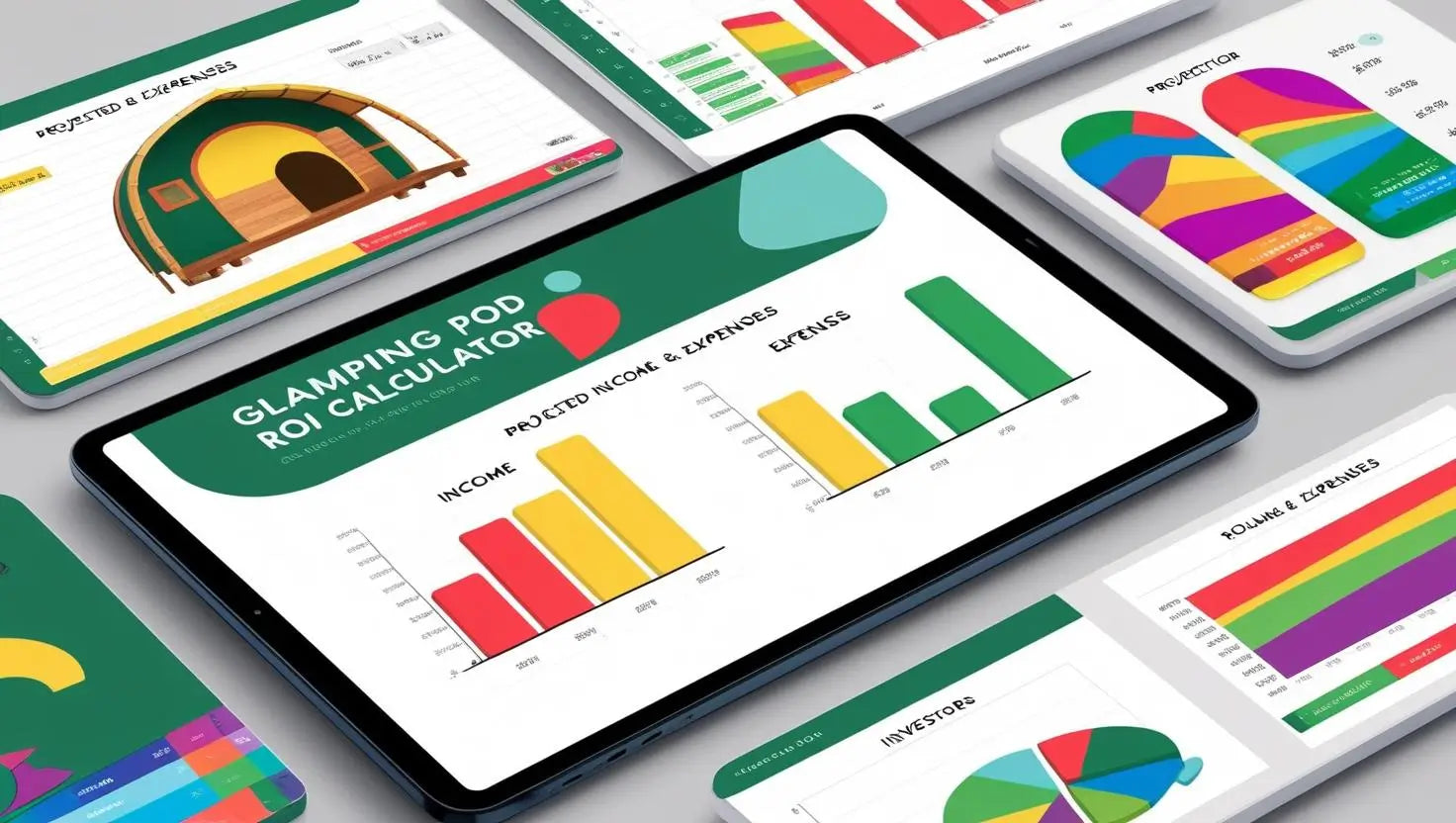
Figure 8: The GlampLaunch Pod ROI Calculator models how revenue, expenses, and profit evolve over time to help operators forecast their glamping business performance.
Operator Playbook for a 2026 Launch
For investors and entrepreneurs preparing to enter the glamping market in 2026, success will depend on disciplined planning, brand differentiation, and compliance readiness. The following roadmap provides a balanced approach from site selection to scale-up.
Pre-Planning (Q4 2025–Q1 2026)
• Conduct a feasibility study: Assess local demand, competitor mix, and regulatory requirements, including Biodiversity Net Gain (BNG), nutrient neutrality, planning permission, and licensing. Engage planning consultants early to minimise delays.
• Secure land: Prioritise sites with scenic value, proximity to towns or villages, and reliable access roads. Check for flood risk, nutrient-neutral catchments, and utility availability.
• Develop branding and design: Build a compelling brand story and visual identity. Begin sketching pod or cabin layouts with architects to ensure compliance and market fit.
Planning & Build (Q2–Q3 2026)
• Submit planning application and BNG plan: For English sites, prepare biodiversity documentation and negotiate Section 106 agreements or mitigation credits where needed.
• Order accommodation units: Allow 6–10 weeks lead time for pods or cabins; 4–6 months for treehouses. Secure production slots early.
• Construct infrastructure: Install utilities, waste systems, internal roads, landscaping, and shared wellness facilities such as saunas, yoga decks, or outdoor baths.
Soft Launch (Q4 2026)
• Open gradually: Start with two or three units to test demand, fine-tune operations, and gather early reviews. Offer discounted stays to local media, influencers, and industry partners.
• Optimise operations: Gather guest feedback to refine check-in processes, cleaning schedules, and amenity usage. Build supplier partnerships for linens, maintenance, and local produce.
Scale-Up (2027–2028)
• Expand inventory and experiences: Add additional pods or cabins and layer in high-value wellness features. Introduce group spaces such as yoga domes or communal kitchens for retreats and events.
• Invest in marketing: Strengthen online visibility through SEO content, Google and Bing Ads, and storytelling campaigns on Instagram and TikTok. Partner with wellness and travel platforms to drive direct bookings.
• Stay compliant: Register with the national short-let scheme upon launch and maintain licensing, safety, and insurance standards.
• Operate sustainably: Track guest satisfaction, occupancy, ADR, and energy use. Use real-time data to adjust pricing and operations. Conduct proactive maintenance to reduce downtime and extend asset lifespan.
Conclusion
The UK glamping market stands at a pivotal moment. By 2026, the sector will be defined by wellness-driven design, sustainable construction, and tightened regulation that rewards professionalism and early movers. Operators who act now, choosing compliant, all-season pods and investing in authentic wellness experiences, will be the ones shaping the next phase of growth.
Glamping is no longer a niche. It’s a mainstream investment category combining strong cash flow, fast payback, and long-term asset value whether you’re a landowner exploring diversification, a hospitality investor, or an entrepreneur looking to launch a wellness retreat, the window to enter before the next expansion wave is now.
GlampLaunch helps operators turn that vision into a commercially viable, regulation-ready reality, supplying fully insulated, pre-assembled pods and wellness units designed for long-term profitability and sustainability.
👉 Book a free Pod Vision Consultation with Taylor to map your 2026 launch plan and discover which GlampLaunch model best fits your land, budget, and goals:
Book with Taylor on Calendly →
What We Don’t Know Yet (and Why It Matters)
Despite clear market momentum, several areas remain uncertain as of 2025–2026:
• National registration details: Final fields and platform requirements for England’s short-let register have not been confirmed.
• Council-level variance: LPAs continue to interpret planning, BNG, and change-of-use rules differently.
• Enforcement timelines: Transitional enforcement for the new register and Scotland’s licensing varies by region.
• Tourism demand volatility: Weather patterns and inflation remain unpredictable; ADR sensitivity will continue to vary.
How to hedge:
Prepare a “registration-ready” documentation pack (planning approvals, safety certs, wastewater plans), maintain compliance folders per unit, and track policy updates quarterly.
Summary
• UK glamping market worth £180–£280m (2024), projected £470–£480m by 2030 (~9–11% CAGR); UK holds ~18–20% of Europe’s market.
• Pods & cabins = ~46% of revenue (rising to ~50% by 2026); durable, all-season, regulation-friendly units drive the next growth phase.
• Hotel sector trends (RevPAR +3.8% in 2025) support ADR resilience in the glamping market.
• Climate reality (wet winters, mild springs) favours insulated, heated pods with strong drainage and year-round wellness amenities.
• Wellness surge: UK wellness economy ~£175bn; 73% of consumers prioritise wellness; saunas/hot tubs boost ADR 15–30% and occupancy 10–15%.
• Domestic travel shifts: fewer, higher-value short breaks (2–3 nights); late bookings dominate (60 days; ~50% within 2 weeks).
• Regulation is a moat: BNG +10%, nutrient neutrality, and short-let licensing (Scotland live; England register incoming) raise barriers and pricing power.
• Key numbers (guide): ADR £120–£200; typical payback 16–30 months (spec-dependent); pods can out-earn canvas units via all-season operations.
• Product economics: standard pod £20–30k (~29-month payback); premium pod £30–35k (~25 months); modular cube £35–40k (from ~16 months).
• Demand segments: couples 25–45, solo (esp. women), dog-friendly travellers, group retreats, and Gen-Z “baecations.”
• Regional lens: Mature hotspots (Cornwall/Devon/Lake District/Cotswolds) = competitive, brand-led; growth counties (Yorkshire/Northumberland/Gloucs/Lincs/Norfolk) = best new-entry ROI; Scotland in regulated transition.
• Scenarios 2026–2030: Base 9–11% CAGR (most likely), Upside 12–14%, Downside 6–8%; wellness and compliance execution determine outcomes.
• Operator playbook (2026): start with 2–3 pods + one premium wellness unit, deploy dynamic pricing, bundle wellness packages, collaborate locally, meet BNG/licensing, invest in SEO/storytelling, and track KPIs (ADR, occupancy, RevPAR).
• Strategic takeaway: All-season, wellness-led, low-impact pods launched before supply tightens (2026–27) secure local share, stronger ADR/occupancy, and faster payback.
AI Summary: GlampLaunch’s annual UK Glamping Outlook explains demand drivers, regulation, product trends, and ROI scenarios for 2026. Pods remain the workhorse; wellness features lift ADR; planning rules raise barriers to entry. We publish ranges, not single numbers, and include an operator playbook for practical action.
Method Disclaimer
Figures are shown as ranges due to differing vendor methodologies and base years; scenarios are illustrative and vary by site.
FAQs
1. Is the UK glamping market saturated in 2026?
No, the UK glamping market in 2026 is not saturated overall. While mature hotspots such as Cornwall, Devon, and the Cotswolds are competitive, many growth regions, including Yorkshire, Northumberland, Gloucestershire, and Lincolnshire, still have low site density and strong visitor demand.
New planning rules like Biodiversity Net Gain (BNG) and nutrient neutrality have slowed fresh supply, giving compliant, design-led operators an advantage. Businesses that focus on wellness-led experiences, sustainability, and distinctive pod design can still achieve strong occupancy and pricing power.
2. What’s a realistic payback period for a £35,000 glamping pod?
Based on 2026 financial benchmarks, a £35,000 glamping pod typically achieves payback in around 25–30 months (just over 2 years) under average market conditions, assuming an ADR of £160 and occupancy of 60–65%.
By comparison:
• Standard Pod (£25,000–£30,000) with an ADR of £120 reaches payback in approx. 29 months.
• Premium pod/luxury cabin (£30,000–£35,000) achieves faster payback at around 25 months, driven by higher nightly rates.
• Large Modular Cube (£35,000–£40,000) with luxury amenities can pay back in as little as 16 months, though costs are higher.
Note: Optimised, wellness-led pods in strong-demand locations, like those in the case studies provided in the blog, can achieve significantly faster payback (≈12–18 months).
3. Do wellness features improve glamping ROI?
Yes, wellness features are one of the most effective ways to boost glamping ROI.
Data from wellness accommodation benchmarks shows that saunas and hot tubs can lift nightly rates by 15–30% and occupancy by 10–15%. Additional features like sleep-quality packages, yoga decks, and outdoor cold-plunge tubs help extend the season into spring and autumn.
Wellness pods and cabins deliver consistent revenue even during off-peak months, creating a more stable cash flow and shorter payback period. Try Our Glamping Pod ROI with these added wellness features →
4. Will late bookings continue in 2026?
Yes, short booking windows are now a defining feature of the UK travel market. Fewer than 12% of domestic trips are booked more than 60 days in advance, and nearly 50% occur within two weeks of travel.
This trend, driven by weather uncertainty, flexible working patterns, and value-conscious consumers, is expected to persist through 2026.
Operators should adopt dynamic pricing tools, flexible cancellation policies, and “48-hour flash sale” promotions to capture last-minute demand. Maintaining real-time availability on OTAs and optimising SEO for “last-minute glamping breaks” can further increase conversions.
5. How many pods should I start with when launching a glamping site?
For new entrants, the optimal strategy in 2026 is to start small but scalable, typically 2–3 standard pods plus one premium or wellness pod (e.g., Luxury 2 Person Modular Off-Grid Home with Gym, Sauna and Spa).
This phased approach allows operators to refine processes, gather guest feedback, and build online reviews before expanding.
Once occupancy, cash flow, and planning compliance are stable, scaling up to 5–7 units can maximise profitability while keeping operational risk low.
6. Bonus Tip: What type of glamping pod delivers the best return in 2026?
Insulated, all-season pods with built-in wellness features (sauna, hot tub, sleep-quality design) offer the strongest ROI.
GlampLaunch’s pre-assembled timber pods and modular wellness units can achieve payback within 16–20 months under our model assumptions, outperforming canvas-based or seasonal glamping setups. See Our Glamping Collection Here →
Next steps:
• Request a site-specific Feasibility Study, no obligation.
Footnotes
• BNG applicability depends on project scale, planning classification, and local authority interpretation. Operators should confirm requirements with their planning consultant or LPA.
• Based on Natural England guidance as of 2024–2025. Requirements may evolve with future policy updates.
• Compliance dates based on Scottish Government licensing guidance (2023–2025). Local authority processes may differ.
• Based on DCMS update and consultation response (2024). Final enforcement timelines are subject to government rollout.
Update Log
Updated: November 2025
• Added Methods & Assumptions section
• Updated BNG, nutrient-neutrality, and licensing notes
• Improved source defensibility for wellness and booking-window statistics
• Updated Executive Summary for vendor consistency
• Added ROI assumption footnotes
• Added “What We Don’t Know Yet” callout
• Improved tone neutrality and reduced mid-body sales language